
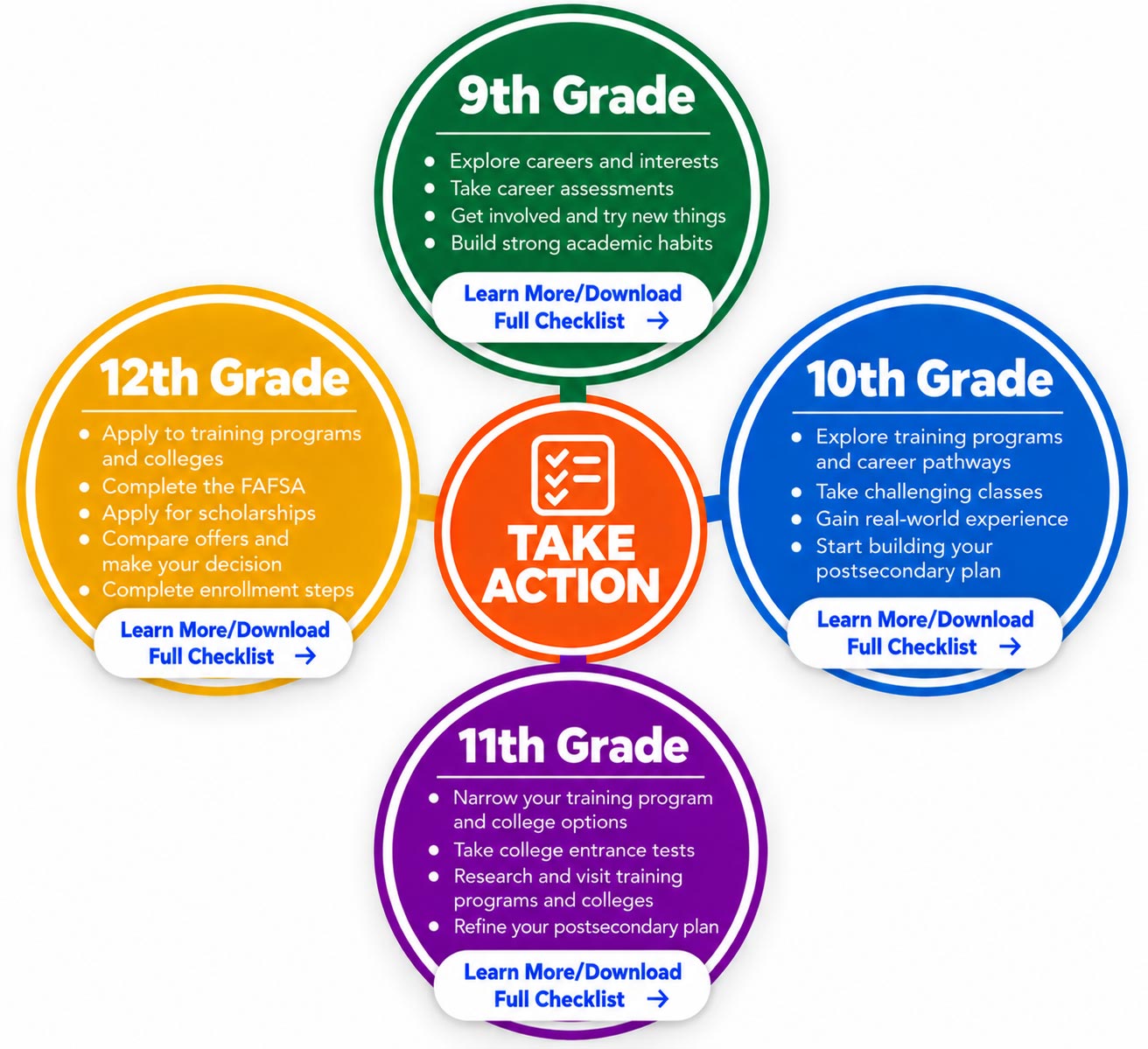
Take Action
Knowing where you want to go is just the beginning. Now it’s time to take the next step. Whether you’re planning for life after high school, applying to college or career training, completing the FAFSA, or getting ready to enroll, we’ll help you understand what to do, when to do it, and where to get help.
And you don't have to do it alone. For each step, we'll show you Your Team — the people and resources that can help.
- You — Explore, ask questions, and take the next step.
- Parent/Family — Talk with you about your interests, choices, and plans.
- School Counselor — Help you choose classes, stay on track for graduation, and plan for life after high school.
- Xello — Your school's online tool for exploring careers, planning classes, and preparing for what's next.
- BACCAN — Local information and resources for careers, education and training, financial aid, and more.
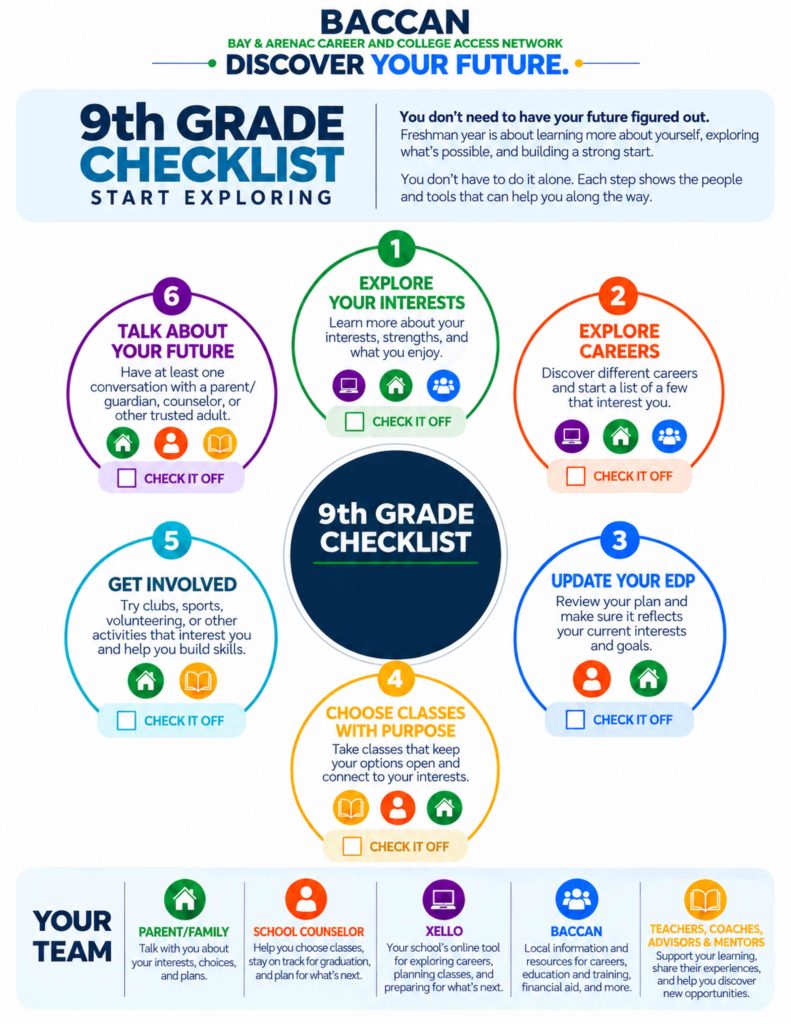
9th Grade: Start Exploring
Freshman year is a time to learn about yourself, explore your options, and start building a strong foundation for the future. You do not need to know exactly what you want to do yet.
Explore careers and your interests, choose classes that keep your options open, get involved in activities, and keep your Educational Development Plan (EDP) up to date. Most importantly, talk with the people who can help, including your family, school counselor, teachers, coaches, advisors, and mentors.
Your goal this year isn’t to have everything figured out. It’s to explore, learn, and try new things.
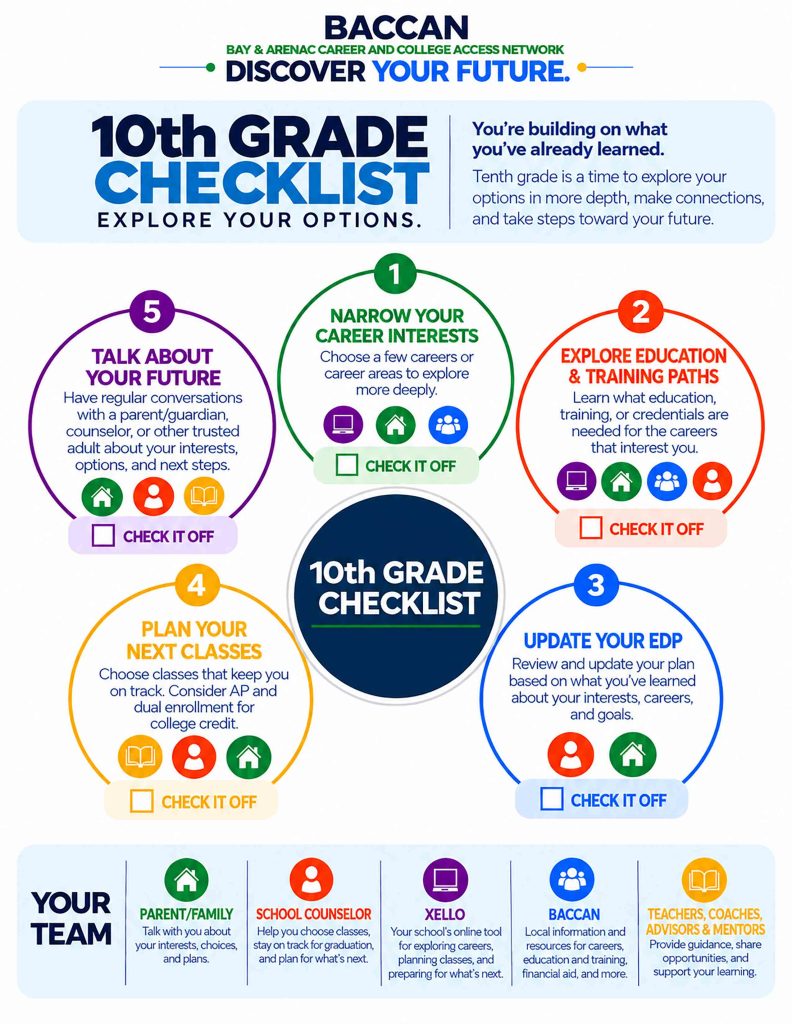
10th Grade: Explore Your Options
You’re building on what you’ve already learned. Tenth grade is a good time to explore your interests more deeply, learn what different careers require, and make choices that keep your future options open.
Narrow Your Career Interests
Choose a few careers or career areas that interest you and explore them more deeply.
Explore Education & Training Paths
Find out what education, training, certifications, or credentials are needed for careers you’re considering.
Update Your EDP
Review your Educational Development Plan and update it based on what you’ve learned about your interests, careers, and goals.
Plan Your Next Classes
Choose courses that keep you on track and consider opportunities like AP and dual enrollment to earn college credit.
Talk About Your Future
Keep talking with your family, school counselor, teachers, coaches, advisors, and other trusted adults about your interests, choices, and next steps.
Remember: You don’t have to know exactly what you want to do yet. The goal in 10th grade is to explore, learn, and keep your options open.
11th Grade: Plan Your Next Step
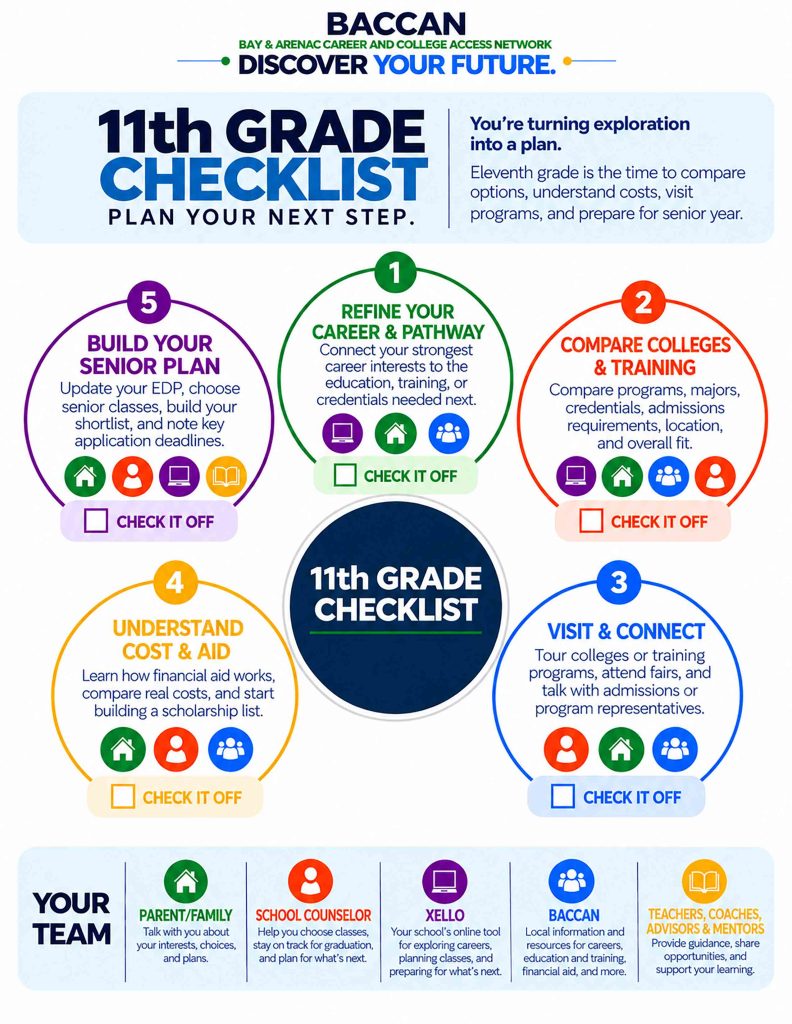
You’re turning exploration into a plan. Eleventh grade is the time to compare your options, understand costs, visit colleges and training programs, and start preparing for senior year.
Refine Your Career & Pathway
Connect your strongest career interests to the education, training, or credentials you will need after high school.
Compare Colleges & Training Programs
Look at programs, majors, credentials, admission requirements, location, cost, and overall fit.
Visit & Connect
Tour colleges or training programs, attend fairs and events, and talk with admissions or program representatives.
Understand Cost & Financial Aid
Learn how financial aid works, compare real costs, and begin identifying scholarships and other ways to pay.
Build Your Senior-Year Plan
Update your EDP, choose senior classes, create a shortlist of programs, and keep track of important application deadlines.
Remember: You don’t need to have everything decided yet. The goal in 11th grade is to narrow your options, compare them carefully, and enter senior year with a plan.
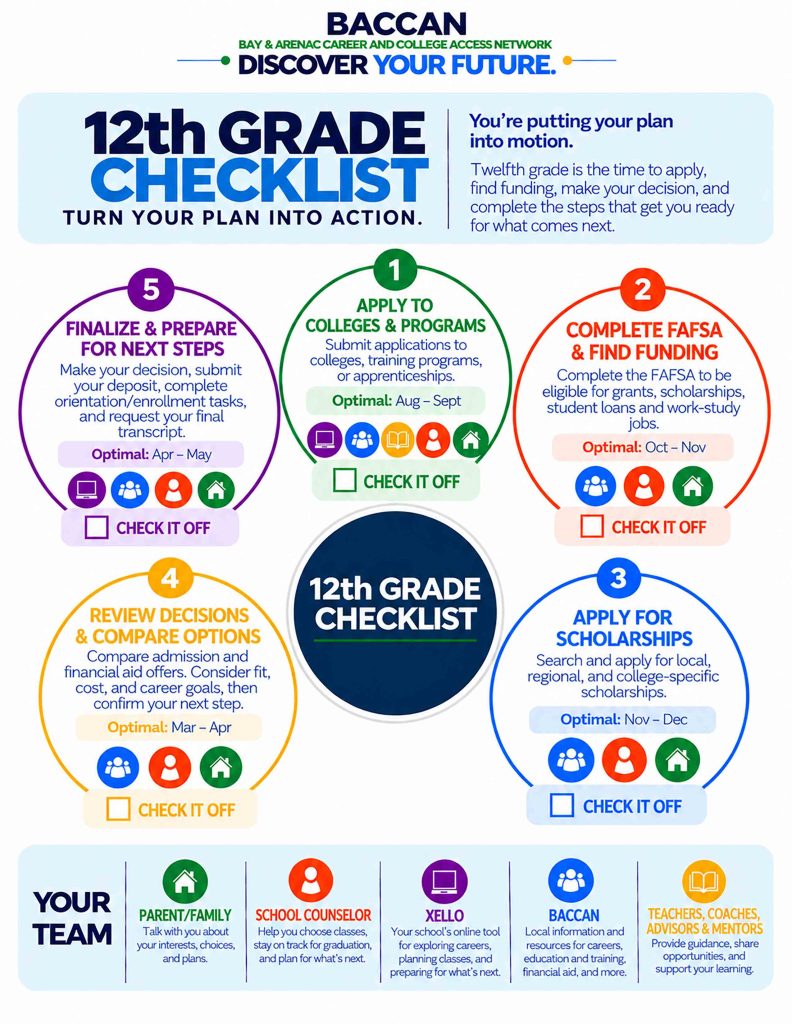
12th Grade: Turn Your Plan Into Action
You’re putting your plan into motion. Twelfth grade is the time to apply, find funding, compare your options, make your decision, and complete the steps that prepare you for what comes next.
August–September | Apply to Colleges & Programs
Submit applications to colleges, training programs, apprenticeships, or other pathways that fit your goals. Deadlines vary, so always check each program’s requirements.
October–November | Complete the FAFSA & Find Funding
Complete the FAFSA to be eligible for grants, scholarships, student loans, and work-study jobs. In Bay and Arenac counties, our goal is FAFSA completion by December 1.
November–December | Apply for Scholarships
Search and apply for local, regional, and college-specific scholarships. Keep looking throughout senior year because deadlines vary.
March–April | Review Decisions & Compare Options
Compare admission and financial aid offers. Consider overall cost, program fit, location, career goals, and what each option provides.
April–May | Finalize & Prepare for Next Steps
Make your decision, submit required deposits, complete orientation and enrollment tasks, and request your final transcript.
Remember: These are optimal timelines, not hard deadlines. Each college, training program, apprenticeship, scholarship, and financial aid opportunity will follow its own schedule. It’s a smart idea to put the deadlines for your preferred options in a calendar and share it with a parent/guardian/supporter.